1995 was supposed to be baseball’s comeback. After the catastrophic strike of 1994—which canceled the World Series for the first time in 90 years—the sport needed heroes. It needed redemption. It needed someone to rally behind.
And in the American League, it got three incredible candidates:
- Albert Belle, who put up numbers that haven’t been seen since—literally.
- Edgar Martinez, who posted one of the greatest pure hitting seasons of the modern era.
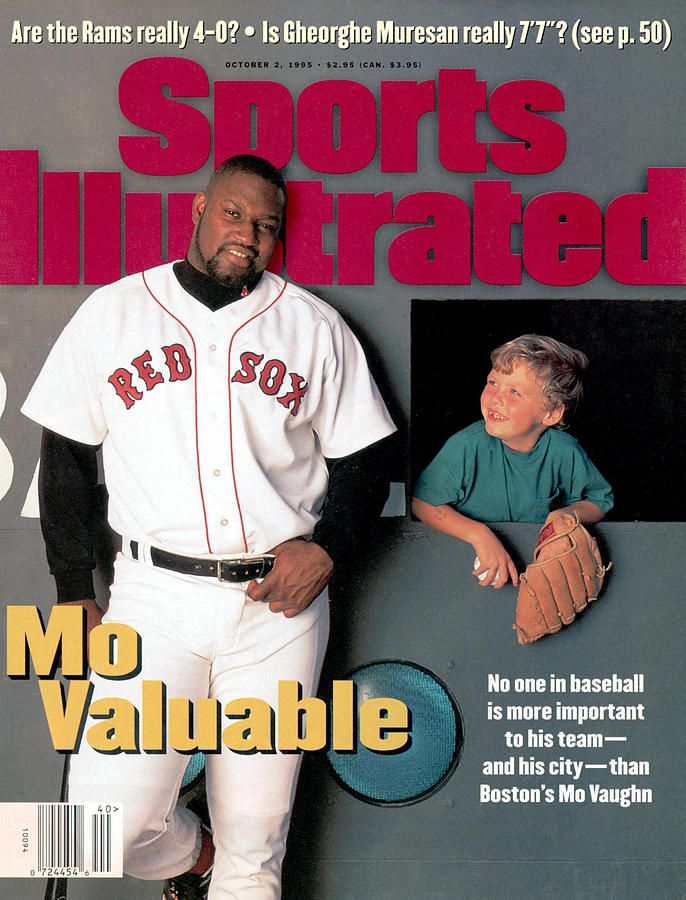
- Mo Vaughn, a good player on a great team with a great smile.
Guess who won?

The Numbers Don’t Lie
Let’s start with what voters were supposed to care about: on-field performance.
1995 MVP Finalists: Key Stats

Belle led the league in:
- Home Runs (50)
- Doubles (52)
- Total Bases
- Slugging
- Extra-base hits
- Tied for 1st in RBI
- Tied for 1st in WAR
And if modern metrics had been in play? Belle’s 7.0 WAR would’ve buried Vaughn’s 4.3.
Edgar? He had a higher batting average, OBP, OPS, and the highest WAR of the three.
Yet Mo Vaughn — who trailed both in every meaningful stat — won the award.
The Voting Was Close—But Telling
Here’s the actual vote breakdown:
- Mo Vaughn: 12 first-place votes, 308 total points
- Albert Belle: 11 first-place votes, 300 total points
- Edgar Martinez: 8 first-place votes, 293 total points
The numbers weren’t just close—they were a referendum. Belle and Edgar both beat Vaughn in nearly every advanced and traditional metric. Yet Vaughn’s reputation—not his production—nudged him over the top. One more first-place vote and the narrative flips. Instead, baseball handed its highest honor to the safest choice, not the strongest season. That’s not just a close vote—it’s a cautionary tale.
The Character Clause… That Didn’t Add Up

The excuse often cited is:
“Belle didn’t win because of his attitude.”
He was combative. He didn’t talk to the press. He scared reporters. He smashed thermostats. He told the BBWAA exactly what he thought of them—and they remembered.
But if character was the deciding factor… how do you explain Edgar Martinez?
Edgar had the numbers. He had the humility. He had the love of his teammates, fans, and the game itself.
And yet, he finished third.
So if Belle was too angry and Edgar was too invisible, Mo Vaughn won by being just likable enough in the right uniform.
Postseason and Position Bias Make It Worse
Belle’s Indians won the AL Central with 100 wins.
Vaughn’s Red Sox? Wild Card, finishing 7 games behind Cleveland.
Postseason influence? Belle outperformed Vaughn in October, too.
Belle in the ALDS:
- 400 AVG
- .800 SLG
- 1 HR
Vaughn in the ALDS:
- 2-for-15
- 0 HR
- 6 strikeouts
And then there’s Edgar.
He was penalized for being a designated hitter—a bias that’s plagued Hall of Fame and MVP voters for decades. Meanwhile, Vaughn played passable first base and somehow gained narrative points just for wearing a glove.
But did Vaughn save an MLB franchise from imploding? Edgar Martinez did.
Edgar Martinez to the Rescue
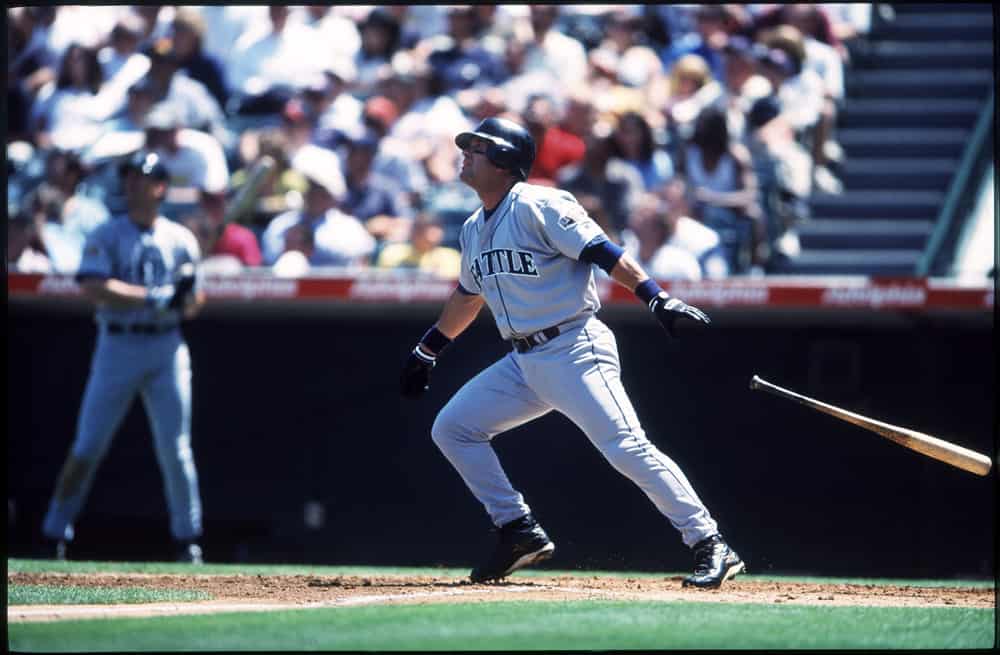
In 1995, the Seattle Mariners were playing for more than a playoff berth—they were fighting for the future of baseball in the Pacific Northwest. For years, the franchise had struggled with attendance, relevance, and stadium issues, and ownership was openly considering relocation.
But down the stretch of that strike-shortened season, Edgar Martinez and the Mariners went on a tear. Martinez’s iconic double in Game 5 of the ALDS — scoring Ken Griffey Jr. to beat the Yankees — became one of the most important hits in franchise history.
The team’s dramatic run electrified the city, reignited fan passion, and helped push through public funding for a new stadium. Without that postseason magic, the Mariners may have left Seattle entirely. Edgar didn’t just lead the league in OPS — he helped save baseball in an entire city.
Belle got punished for his personality. Edgar got punished for his position. Vaughn got rewarded for being…fine.
The Boston Factor
Let’s be blunt about market share, especially in terms of media and legacy.
- Boston is a marquee franchise.
- Vaughn played in a top 10 media market.
- Edgar played in a market MLB barely recognized in 1995.
- Belle played in Cleveland, which had the best team in the AL and still couldn’t overcome voter bias.
In the wake of a crippling labor dispute, MLB needed a clean face in a big market. They needed a feel-good story to hang their marketing on.
Not from Cleveland.
Not from the Pacific Northwest.
An MVP from Boston. From Fenway Park. From one of the most prolific teams in sports history.
Belle and Martinez played in cities that had to fight for national airtime and press coverage—even while their teams were winning. And Vaughn—power-hitting, smiling, Boston Red Sox Mo Vaughn—fit the bill.
Not because he was the best. Or the Red Sox were the best. But he was the easiest to sell in the national media, especially given his relationship with the media, the actual media market, and the devoted nationwide fanbase of the Red Sox, it made sense for MLB to overlook statistical dominance for the team ‘leader’ (as if Belle and Martinez weren’t team leaders).
Mo Vaughn wasn’t the story. He was the solution.
When Every Angle Favors Someone Else
Let’s stop pretending this was ever just about baseball.
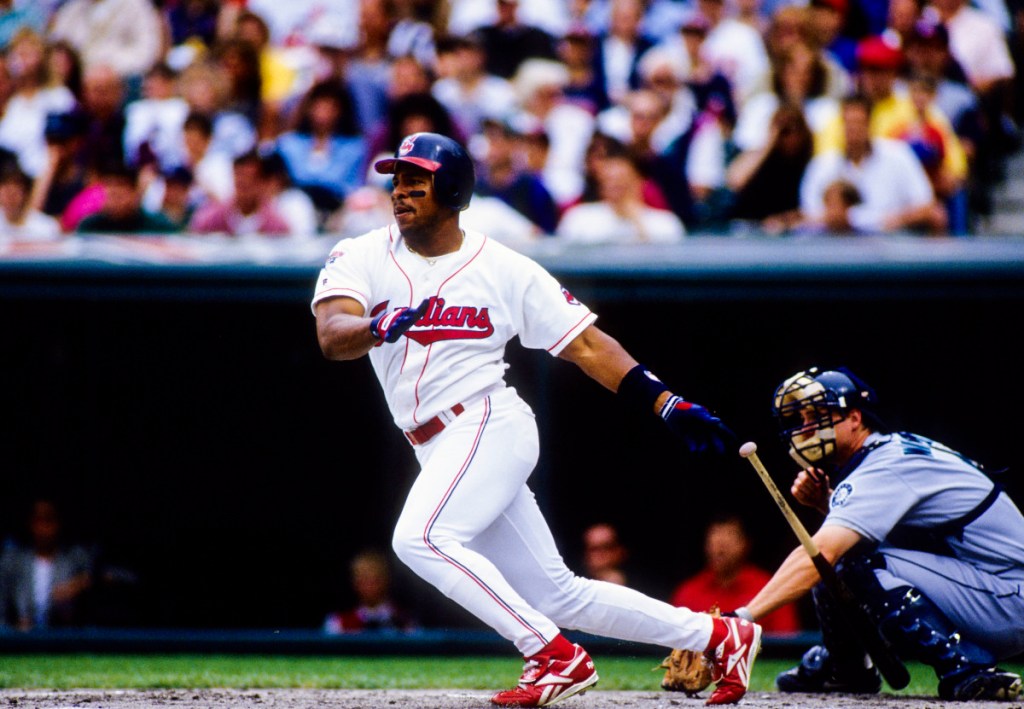
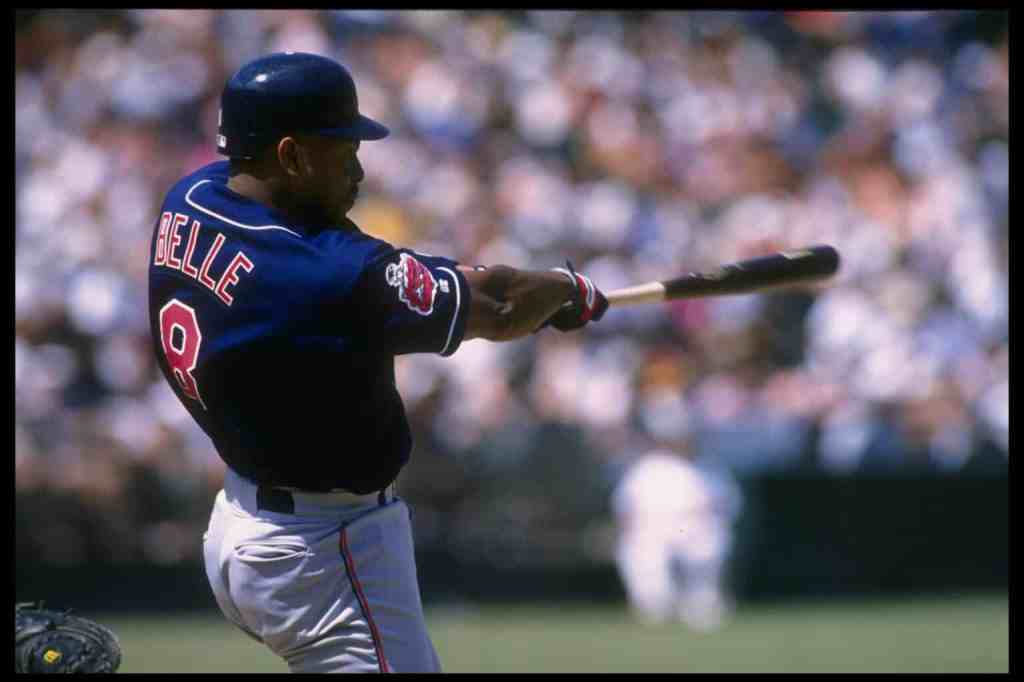
Albert Belle led the league in home runs. In doubles. In total bases. In slugging. In extra-base hits. He tied for the lead in RBI and was 0.2 points from WAR leader Edgar Martinez. He had 50 home runs and 50 doubles in the strike-shortened 1995 season, a feat that has never been repeated, and one that may never be.
But Belle was not alone in an amazing 1995 season. Edgar Martinez led the league in batting average. In OBP. In OPS. In WAR.
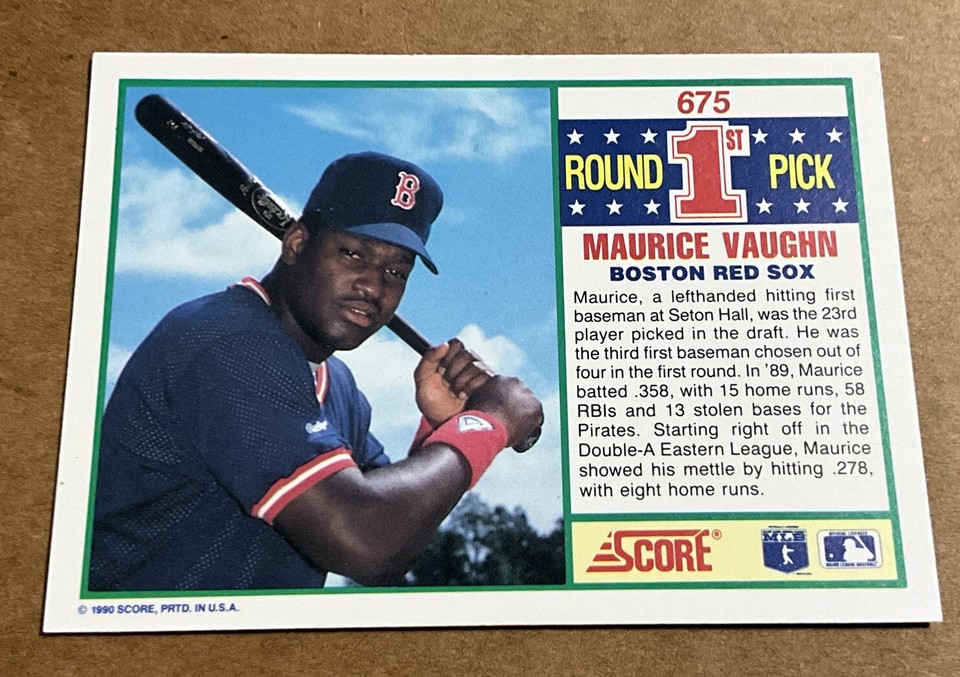
Mo Vaughn? While he tied with Belle for RBI King at 126, he didn’t lead in a single major category — except the one that counted: media comfort.
Belle’s Indians steamrolled their division with 100 wins. Edgar’s Mariners sparked a miracle run that literally saved baseball in Seattle. Vaughn’s Red Sox squeaked into the playoffs and got bounced in the first round.
The numbers weren’t just close. They were decisive.
So why did Vaughn win?
Because 1995 was never going to give Albert Belle the benefit of the doubt. Not after the corked bat saga. Not with his refusal to play nice with reporters. Not when he scared the same men whose ballots would decide the outcome.
This wasn’t a Black-vs-white dynamic. It was more specific—and more insidious.
It was about which kind of Black man the media was willing to embrace.
Belle was furious. Focused. Brutally dominant. And he didn’t hide it.
Vaughn was gregarious. Safe. Smiling. And he played in Boston, where the press could spin him into a working-class redemption hero.
Put Belle’s production in a white man’s hands and he’s an icon. Put Vaughn’s smile on a less productive player and he still gets the trophy. The MVP vote didn’t reward results. It rewarded relief. Relief that baseball had someone they could sell. Relief that the post-strike stench could be masked by a grin and a jersey that said “Red Sox.”
Belle wasn’t passed over because he lacked numbers. He was passed over because he refused to be handled.
Martinez wasn’t passed over because he lacked numbers. He was passed over because he played in an isolated market in a position (DH) that baseball still refuses to respect.
Belle and Martinez, while statistically superior in every major stat, were passed over for the guy that made post-strike baseball at worst palatable and at best relevant.
And in a systemic corporation like Major League Baseball, leadership is desperate for control of their media narrative (talking to you BBWAA) with statistics apparently being a secondary influence in measuring accomplishment and dominance.
That‘s why both Belle and Martinez were the least valuable players of the three.
Final Word
Major League Baseball and the Baseball Writers Association of America didn’t choose the best player.
They didn’t even choose the best story.
They chose the safest one.
They chose the most convenient one.
And that’s how Mo Vaughn walked away with the 1995 MLB MVP award.
 Albert Belle: The Original 50/50 Man
Leave a comment