“God gets you to the plate, but once you’re there you’re on your own.”
— Ted Williams
There’s something mythic about a player who leaves the game with a home run. It’s a punctuation mark. An act of defiance. A way of saying: I still had more in the tank.
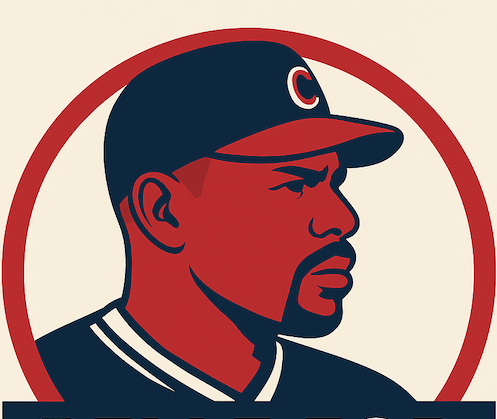
Only a handful of greats have done it, but two names stand out—not just because of the way they exited, but because of the raw, unapologetic fury they brought to the game while they were in it: Ted Williams and Albert Belle.
The Final Blast
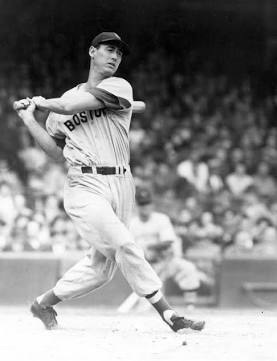
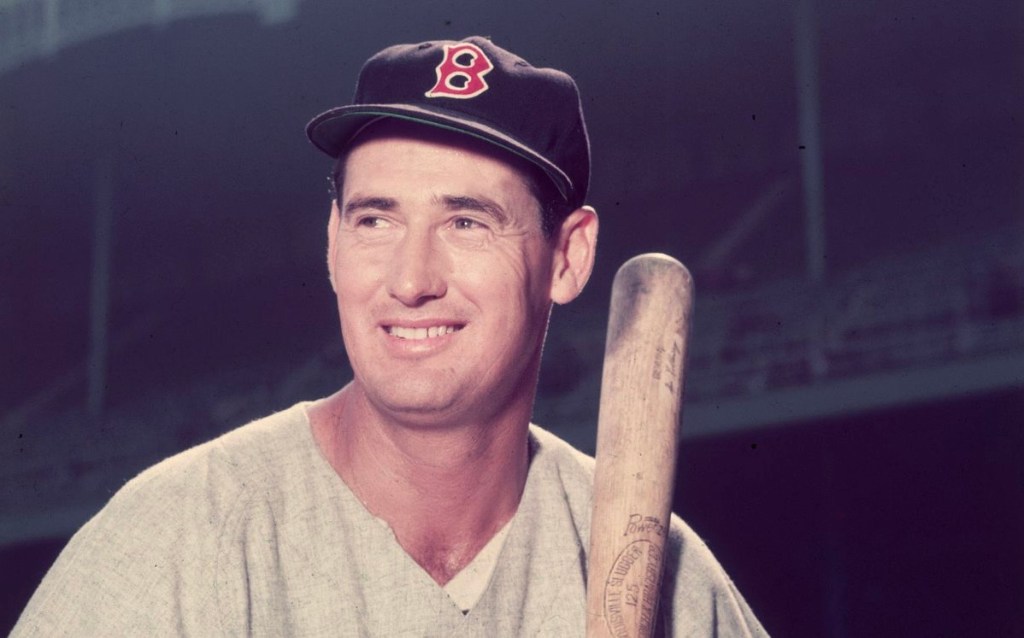
Ted Williams hit a home run in his final career at-bat on September 28, 1960, at Fenway Park. He famously refused to tip his cap to the Boston fans who had jeered him for years.
Albert Belle hit his final home run—career number 381—on October 1, 2000, in Baltimore. It was his final swing as a Major League player, capping off a decade of dominance that most fans and writers still refuse to reckon with.
Neither man played another inning.
Production Over Praise
Ted Williams batted .344 over 19 seasons. He missed nearly five full years to military service, yet still finished with 521 home runs and two MVP awards. He also walked more than he struck out—something that sounds made-up in today’s game.
Albert Belle hit .295 with 381 home runs over 12 seasons. He led the league in RBI three times, slugging three times, and had more extra-base hits in a five-year span (1993–97) than any player in history.
Both were punished by the media. Both were described as moody, intense, and difficult. Neither played the public relations game. And neither let it stop them from destroying baseballs.
War, Injury, and the What-If Machine
Williams’ absence from baseball was involuntary. He flew fighter jets in World War II and Korea, sacrificing his prime years—ages 24–26 and 33–34—for his country. There’s little doubt he’d have surpassed 600 home runs had he played those seasons.
Belle’s departure was medical. Diagnosed with a degenerative hip condition in 2001, he was forced to retire at 34. He hit 23 homers and drove in 103 runs in his final season—the most RBI ever in a player’s final year. He was still elite. And he knew it.
Williams was lionized retroactively. Belle was demonized in real-time.
But both careers were cut short—one by war, the other by injury. And both left numbers behind that beg the question: What more could they have done?
Legacy Wars: Who Gets Remembered?
Ted Williams is a first-ballot Hall of Famer. He’s revered now as the “Greatest Hitter Who Ever Lived,” a Marine Corps aviator, a Boston icon. But that wasn’t always the case. For much of his career, Williams battled a hostile Boston press corps who mocked his introversion and criticized his refusal to tip his cap.
Sound familiar?
Albert Belle is not in the Hall of Fame. He was knocked off the ballot after just two years, despite having:
A higher career slugging percentage than Reggie Jackson More home runs in his peak than Hank Aaron One of only four players with eight straight 30-HR, 100-RBI seasons
He didn’t have the luxury of posthumous media forgiveness. He didn’t play the game politically. He just played the game.
Walk-Off Justice

A walk-off home run is the ultimate mic drop. It’s not a farewell tour. It’s not a ceremonial pinch-hit. It’s violence in flight—unapologetic, uncompromising, final.
Ted Williams and Albert Belle both ended their careers with one.
The difference? Williams was finally embraced. Belle was never allowed in.
But the symmetry remains. Two complicated men. Two final swings. Two fireballs across baseball’s sky.
And whether you’re Fenway royalty or a Cleveland outcast, when you leave the game with a bomb, you’re telling the world:
“I never declined. You just stopped watching.”
 Albert Belle: The Original 50/50 Man
Leave a comment